


 M-FILES
Fuel Consumption Accounting for Corporate Electric Vehicles from a Tax Perspective –
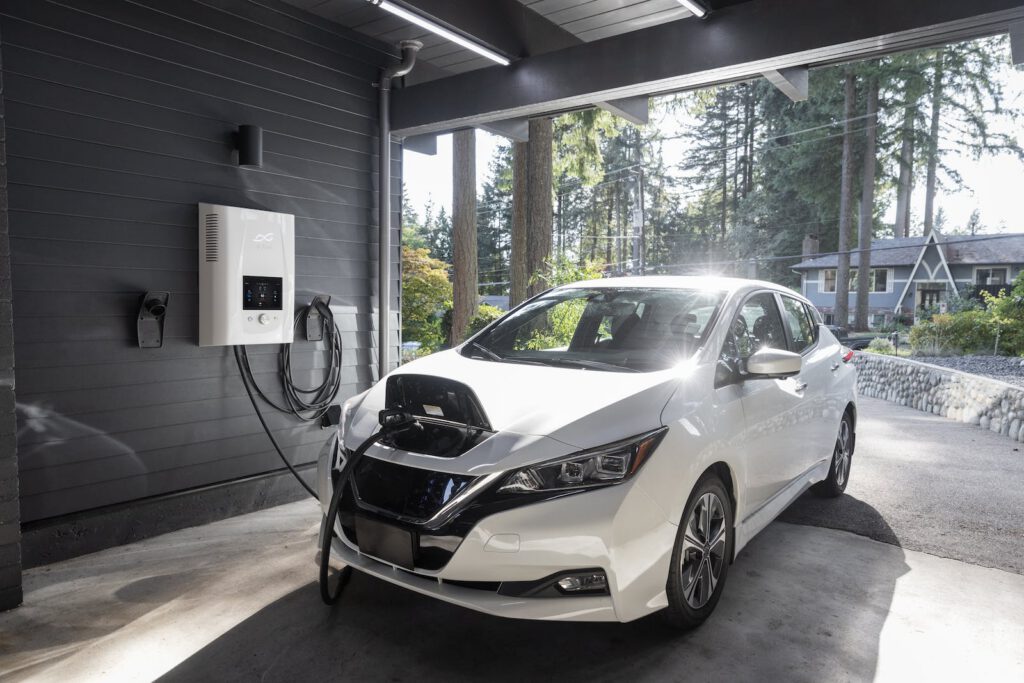
Electric vehicles are becoming increasingly popular today, but they are by no means the most economically advantageous or the cheapest to purchase. With rising electricity prices, they are also not the cheapest to maintain, yet they are gaining favor due to the “green course.” Entrepreneurs are asking – what about accounting for their fuel, or rather, electricity consumption? Is it similar to fossil fuels? Unfortunately – yes!
In accordance with the provisions of the Corporate Income Tax Law (CIT Law), an entrepreneur is obligated to keep records so that the vehicle’s fuel expenses for the actual number of kilometers driven each month, according to the fuel consumption rate set for the vehicle per 100 kilometers, do not exceed the manufacturer’s specified urban cycle fuel consumption rate by more than 20%.
We would like to draw significant attention to the fact that the condition “urban cycle fuel consumption rate” included in the aforementioned provision is based on providing the opportunity to evaluate the highest of the consumption indicators specified for vehicles with fuel consumption by manufacturers.
Taking into account the specifics of electric vehicles, which differ significantly from cars using fossil fuels, contrary to vehicles with fuel consumption, an electric vehicle with the consumption rate specified in the certificate can drive more kilometers in urban mode than when making trips in normal mode outside of it.
In view of the above, and to ensure that equivalent criteria are observed for the electricity consumption of electric vehicles for the application of corporate income tax, when applying Section 8, Paragraph 5, Clause 5 of the CIT Law, one may take into account the highest of the electricity consumption indicators set by the manufacturer, or any of the publicly available average consumption indicators, or, for example, any publicly conducted test indicators.
Furthermore, if the company pays the Company Car Tax (CCT) into the state budget, then detailed accounting of electricity (for example, with waybills or route sheets) is not required to justify the use of electricity for ensuring economic activity.
In such a case, an entrepreneur who pays CCT into the state budget must provide for a procedure in the accounting organization documents for documenting and accounting for vehicle use expenses. This includes establishing the procedure for preparing internal source documents and registers in which the actual number of kilometers driven will be recorded based on the vehicle’s odometer readings at the beginning and end of the month, and in which electricity consumption will be determined. When documenting the use of the vehicle, information regarding electricity consumption must be indicated in such a way that the documents certifying electricity consumption are identified with the specific vehicle consuming the electricity.
Conversely, if the company does not pay CCT for the respective vehicle, then in order to justify the use of the vehicle for economic activity purposes, detailed electricity accounting must be performed (for example, with waybills or route sheets) in accordance with the procedure established in the accounting organization documents.
Regarding the deduction of input VAT for electricity used to charge an electric vehicle, regardless of the type of fuel for the light vehicle (including electricity), these expenses are subject to the input tax deduction restrictions set out in Section 100 of the Value Added Tax Law (VAT Law). For example, if for a purchased, leased, or imported passenger car where the number of seats, excluding the driver’s seat, does not exceed eight seats, input tax was deducted in the amount of 50% in accordance with Section 100, Paragraph 2 of the VAT Law, then for the purchase of electricity to charge such a car, input tax is also deductible in the amount of 50%. This effectively means that an electric car has no advantages over a car using fossil fuel in terms of daily maintenance expense accounting and tax application.
If you need advice on these matters or any type of daily accounting management, contact us here on our website, and our team will rush to your aid, offering favorable terms of cooperation.